In June, I wrote about the biggest decision of my campaign so far: a new boat or a used one. I promised I'd share which way I went.
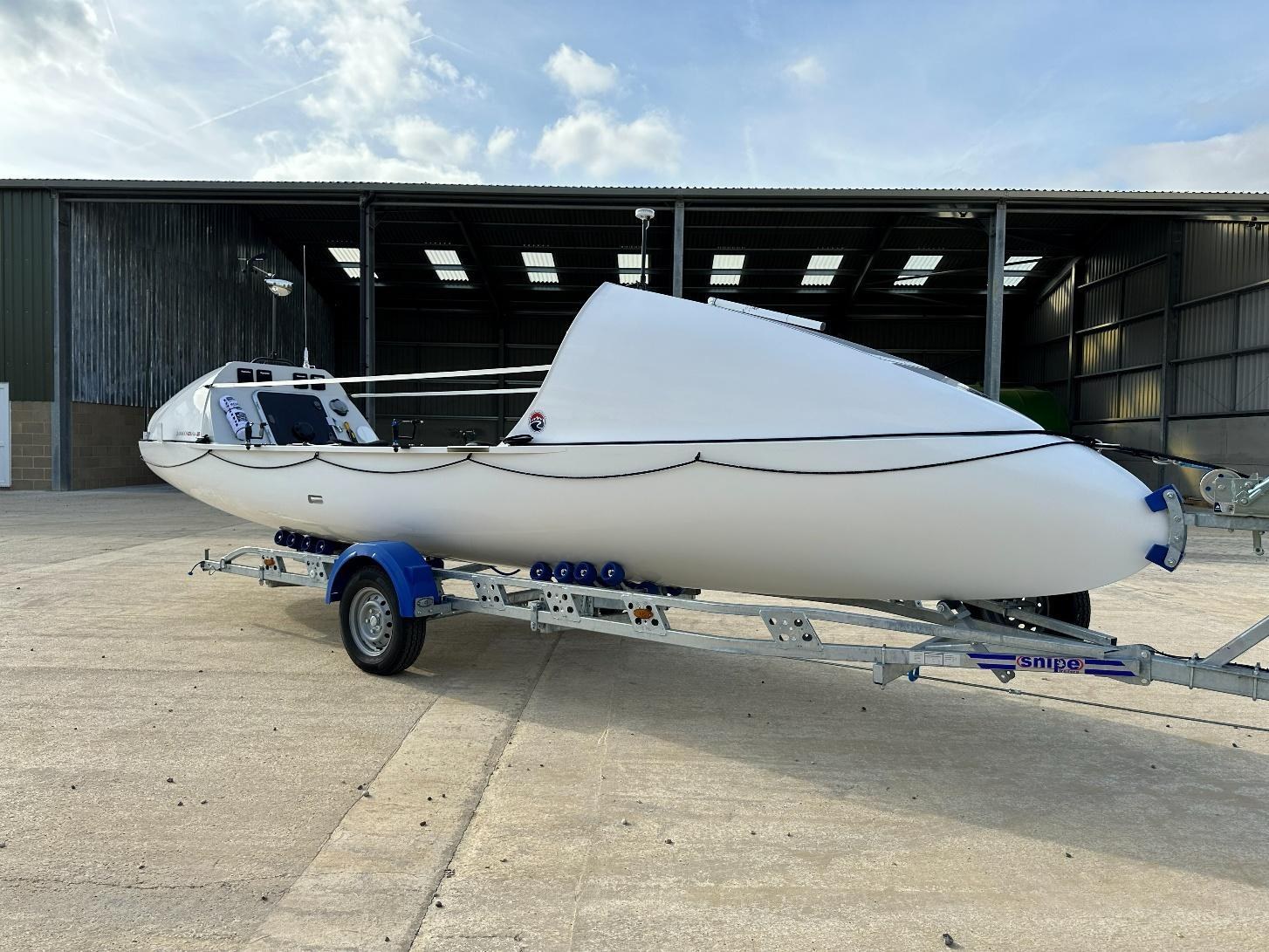
The boat is ordered. It's a new Rannoch R25 Elite, and it's scheduled to start being built next month.
Getting here took most of the summer, two calls with the builder, a decision matrix, and one question I hadn't thought to ask.
Choosing a builder
Only two builders make boats that the World's Toughest Row accepts. I went back and forth, but I settled on Rannoch Adventure fairly early. To me, they felt like the more established builder. That's not a knock on the Ocean Rowing Company: Mark Slats, who is behind it, holds ocean rowing records and is one of the best-known names in the sport.
Practically, Rannoch's website also lists used boats for sale, so it became the place where I did most of my research, new and used alike.
A call at 4:30 in the morning
On June 18, I had my first call with Rannoch. Between the time difference with the UK and my work schedule, the only time that worked was 4:30 a.m. my time. Coffee helped.
Lizzie, from Rannoch, walked me through the company's history in ocean rowing, and we talked about which model suited a solo rower like me. She also told me Rannoch had just redesigned the R25. The new version, the R25 Elite, has upgrades they believe make it a better boat.
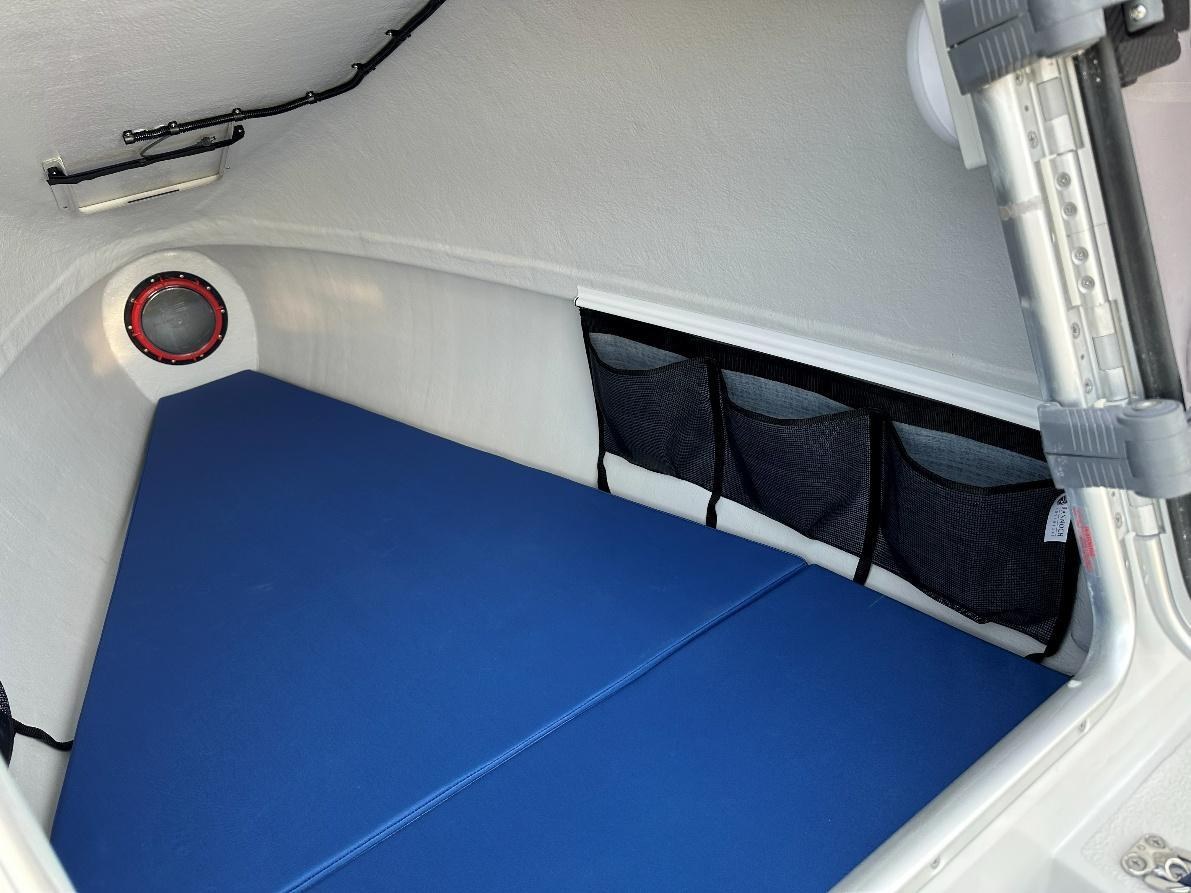
Inside the R25 Elite's cabin: home for the crossing. Photo courtesy of Rannoch Adventure.
Then we got into options and upgrades, and that's where my own theory came back to bite me. In June I'd written that I didn't know what I wanted. On that call, I realized I didn't even know what I needed. It was overwhelming. Lizzie followed up with documents describing every option, which helped, and which also gave me a lot more to think about.
We also talked about how boats lose value. Each crossing takes a little more off. The race also has rules for older boats: once a boat is five years old, or has made four crossings since its wiring was last replaced, its wiring has to be surveyed every year for safety.
Shopping the used market
After that call, I went deep on the used market, and there are a lot of boats out there. I compared them on the year they were built, the number of crossings they'd made, what gear came with them (most included it in the price), and where in the world they were sitting.
On August 14, I had a second call. We went over some of the same ground. I'd hoped to drill down into specifics, but we stayed on the bigger picture.
So I tabled the decision. The race's safety team runs a required virtual orientation for entrants, a full day of education, and I wanted to see whether it would offer any insight first. It didn't settle anything.
The question I hadn't asked
After the orientation, I emailed the race's safety officers. I laid out my decision-making matrix and asked them to tell me what I'd missed.
They did. A used boat, they pointed out, is "trialed and proven." A new build hasn't been tested in an ocean race.
I had been thinking only about wear and tear. When I flipped that logic around, I saw that a new boat could have problems of its own, ones that might not show up until I was in the middle of the Atlantic.
They raised a second point I hadn't considered. The R25 Elite is a new design. The upgrades should make it faster, but that hasn't been proven yet. If I sell the boat after the 2028 race and the Elite turns out to be slower than the original R25, it may not be worth as much.
That pushed me to be honest with myself. The idealist in me says I'll keep the boat and maybe take on other ocean rows. The realist says this could be a one-and-done, and that resale value belongs in the decision.
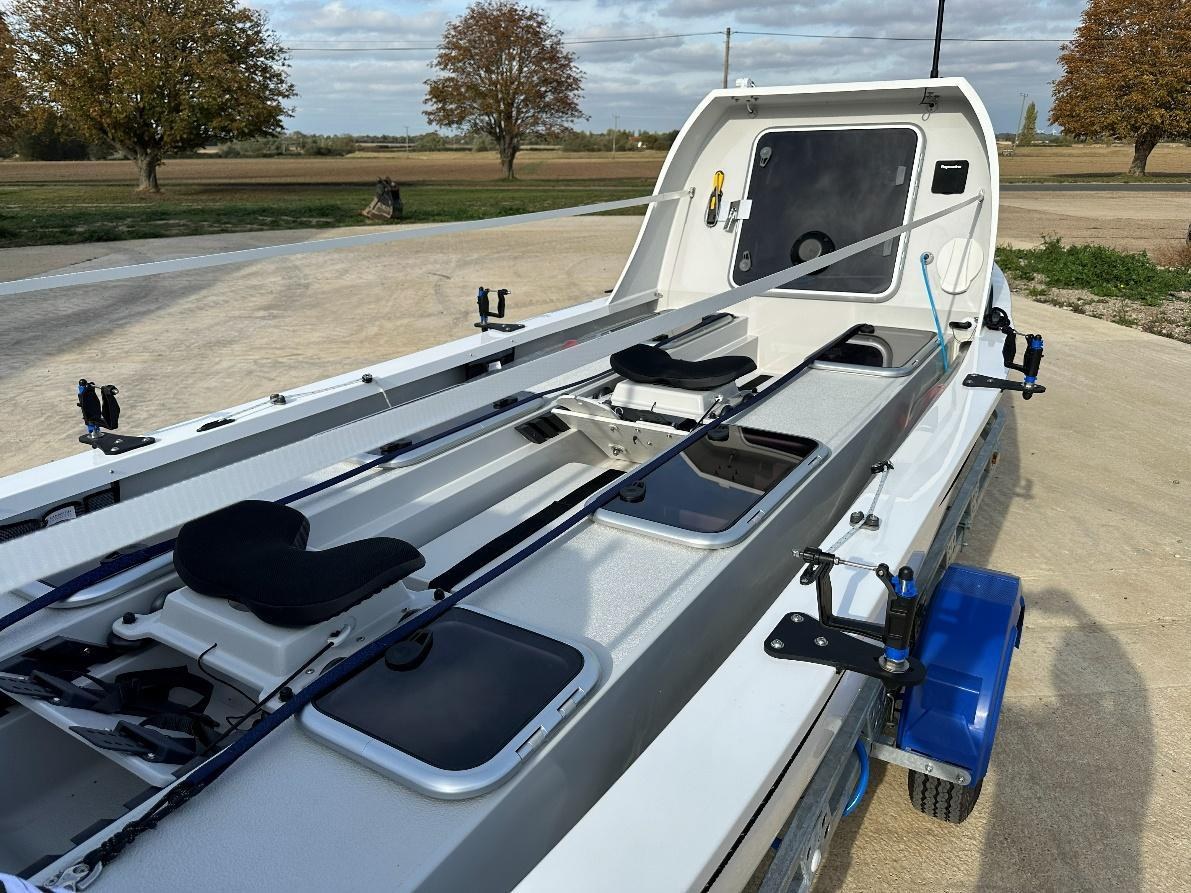
The rowing deck, where most of the 3,000 miles happen. Photo courtesy of Rannoch Adventure.
Why I chose new
In the end, three things decided it:
- The newest technology and gear. More efficient solar panels and batteries, for a start.
- Fewer unknowns. No degraded systems, and no problems inherited from someone else's crossings.
- The idealist won. I hope to keep this boat after 2028. Maybe I'll sponsor a team to help someone else get into the sport. Maybe I'll row the Pacific myself. Who knows where this will lead.
The safety officers' point still stands, and I'm taking it seriously. A new boat has to prove itself, which is one more reason to get it early and put real time on it before the race.
What happens next
I've paid my deposit. Rannoch will start moulding the hull within a month, the fit-out of all the systems begins in January, and the boat should be finished in early to mid February 2027.
I'm hoping to have it in the United States by the end of March. Then the real work starts: logging hours on the water and becoming the best ocean rower I can be.
Getting the boat early helps the campaign, too. A one-of-a-kind ocean rowing boat in the water off New Jersey should draw some attention, and I hope it helps sponsors picture their brand alongside this campaign. Sponsorship and my own money pay for the campaign, so every donation can go to the causes. That gives me a head start on my goal of at least $25,000 each for Honor Flight of Southern New Jersey and a local food-security organization.
Making it real
Wiring the deposit came with a good kind of anxiety. One of my biggest decisions was finally made, and I could turn my attention to the rest of the campaign. But it was also a huge commitment. It made everything real.
Exciting.