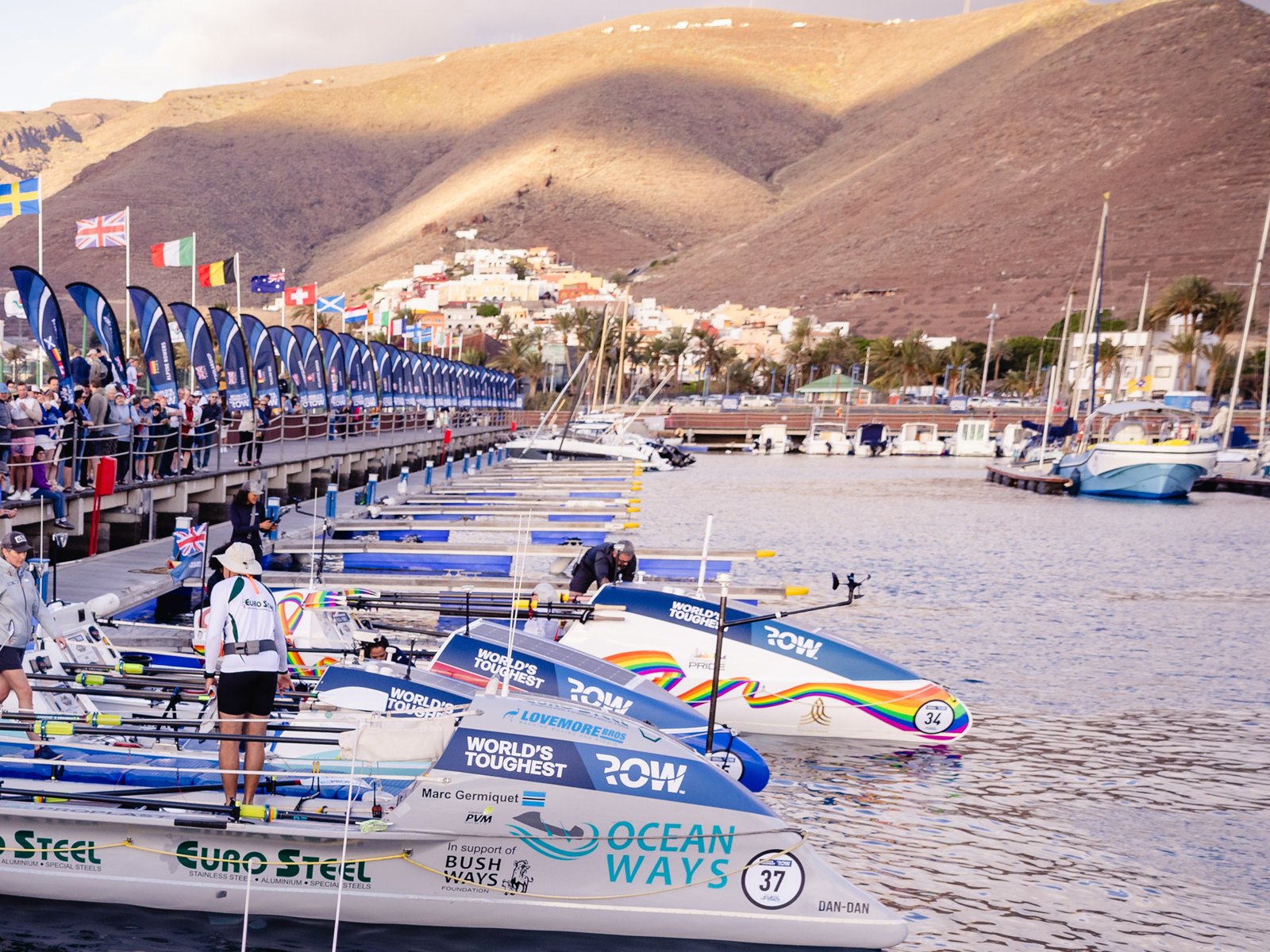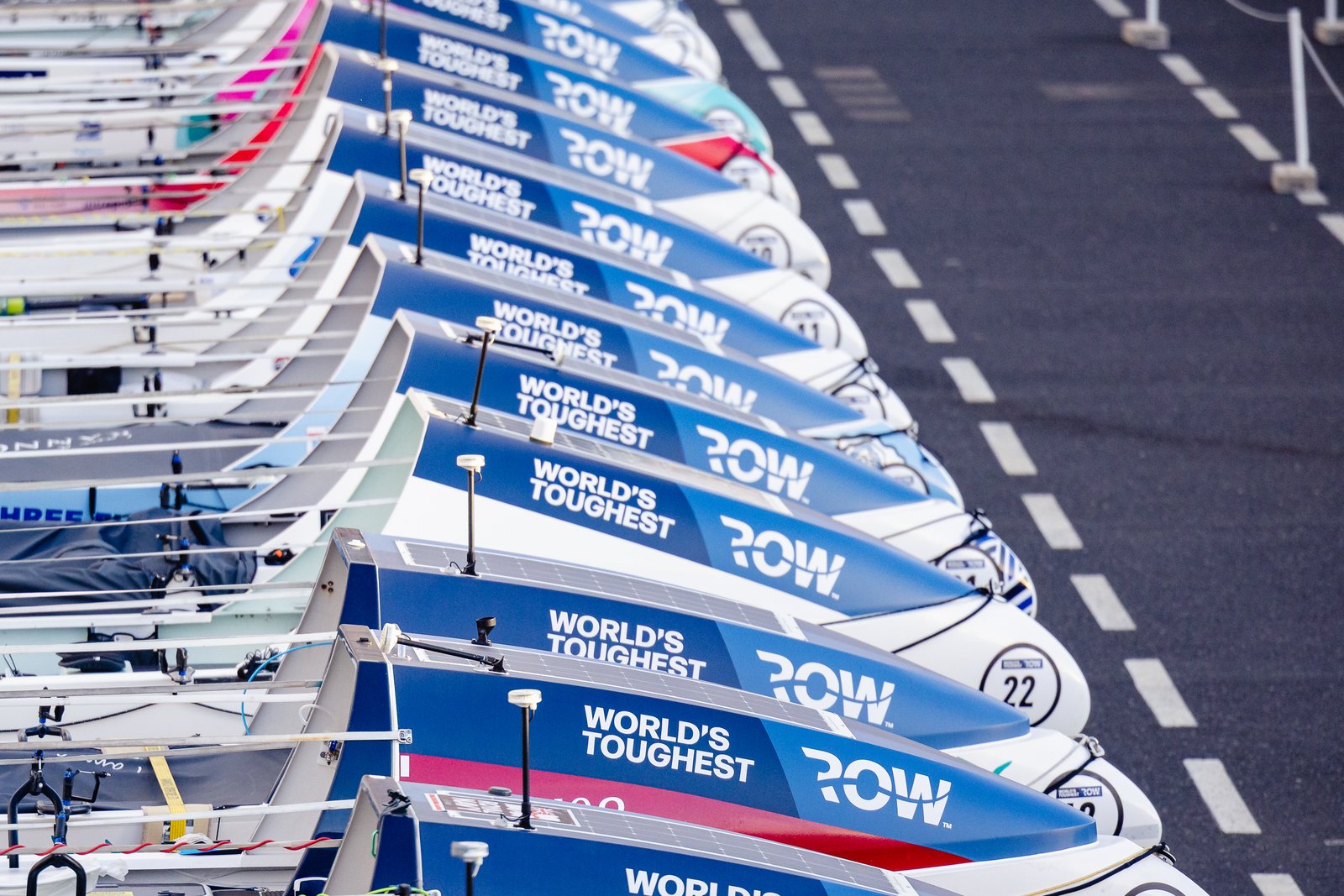
Every item on my to-do list for the World's Toughest Row leads to three more. Since I named the team last month, the list has only grown. But one item sits above all the others: I need a boat.
Why the boat comes first
Here is my honest starting point. I have never been on a rowboat. Not a rowing shell, not a dinghy, and certainly not an ocean rowing boat that I plan to row across the Atlantic, alone and unsupported.
That's exactly why the boat can't wait. Time on the water is going to matter more than almost anything else I do, and I can't get it without a boat.
So here's the plan as I see it today. This summer is for getting organized and getting in shape. If I have a boat over the winter, I get two full seasons on the water, spring through fall in 2027 and again in 2028, before the boat ships to La Gomera in October 2028. That's not a lot of time to learn a new sport and a new boat. Every month I wait takes away from it.
Two builders, two paths
Only two builders make boats the race accepts: Rannoch Adventure and the Ocean Rowing Company. Both build new boats to order, and both have boats out there that have already crossed and are for sale.
That gives me two paths, and choosing between them is the biggest decision I've faced since I said yes to this.
The case for new
- The newest technology and gear, built to the latest race rules.
- No wear and tear. Nothing has been worn down by salt, sun or someone else's crossing.
- No inherited problems. Whatever goes wrong will at least be my own.
- I'd get exactly what I ordered, set up the way I want it.
The one real drawback is cost. New means paying top dollar. I'm working to bring sponsors on board to help with the campaign, but I have to be realistic: in the worst case, I pay for all of it myself.
The case for used
- A lower price.
- Possibly no long shipping trip. If I found a boat already in the United States, I might be able to pick it up myself.
And the drawbacks:
- I wouldn't really know how worn the systems and equipment are. These boats are engineered for the ocean, but the marine environment is hard on everything, electronics most of all.
- I'd be buying someone else's choices. Someone else designed the layout and picked the gear.
- I'd have to decide how old is too old, weighing wear against savings.
- I'd have to inspect a boat, and negotiate with a seller, without really knowing what I'm looking at.
Every boat has its own history
My daughter is good friends with Adam Rowlatt, who rowed last winter's race with Jamie Kidd as Team Secondoary Fun. I seriously considered asking whether their boat might be for sale. It had just made the crossing, and it belonged to people I had a connection to and could trust.
A few days from Antigua, a marlin hunting tuna struck their boat and punched a hole in the hull. They patched it at sea and rowed on to the finish (their post about it). A boat like that would be professionally repaired before it was sold.
It made me think about what buying used really means. Every boat has its own history: the miles it has rowed, the weather it has come through, and the repairs that followed. Some of that history is written down, and some only the last crew knows. With a used boat, part of the job is learning that history before you buy.
The catch in "exactly what I want"
The best argument for a new boat has a catch. Getting exactly what I want only helps if I know what I want. As a beginner, I don't.
A used boat set up by someone who has already rowed an ocean might hold more knowledge than any order form I could fill out. Their choices were tested by 3,000 miles of water. Mine would be guesses.
Everything else that comes with a boat
The boat itself is only the start. The race has a mandatory equipment list, and every boat is inspected against it before it ships and again in La Gomera before the start. Reading through it, I counted decisions, not items. In my own words, and far from the full list:
- Staying alive: a life raft, a grab bag, a lifejacket and a harness to keep me clipped to the boat.
- Talking to the world: a satellite phone, a handheld GPS and a radio, plus the tracker the race issues to every boat.
- Power: solar panels, batteries, and the wiring that ties them together.
- Water: a watermaker that turns seawater into drinking water, and a hand-operated backup for when the electric one fails.
- Medical: a full medical kit, and the knowledge to use it alone.
- Living aboard: seats, oars, food for months and clothing for every kind of weather.
Each of these has makes and models, and versions and options within those. A used boat comes with many of these answers already made, for better or worse. A new boat means making every one of them myself.
Costs I hadn't counted
When I started budgeting, I hadn't thought about import fees. And now there's a newer problem: tariffs. Bringing a boat into the country isn't as simple as paying for the boat. Both paths come with costs I'm only now learning to see.
Where I am today
I haven't decided. I contacted both builders earlier in the year, then held off on following up until my entry was confirmed and I was officially in the race. Now I'm in, and it's time to have real conversations.
What I do know is that this is the biggest decision of the campaign so far, and the clock has already started. I'll share which way I go.
Next leg: I decided in October. The boat is ordered.