When I tell people I'm training to row across the Atlantic, a lot of them picture the Olympics: a sleek boat, a calm river, eight people in perfect time.
That's rowing. This is something else.
What ocean rowing is
Ocean rowing is crossing an ocean in a rowing boat, powered by nothing but oars. No sails, no motor. Crews of one to five live aboard for weeks or months, rowing in shifts around the clock and carrying everything they need for the whole trip.
The best-known ocean rowing races are the World's Toughest Row. There are two:
- The Atlantic: about 3,000 miles from San Sebastián de La Gomera, in Spain's Canary Islands, to Nelson's Dockyard in Antigua. It starts every December. This is my race, in December 2028.
- The Pacific: about 2,800 miles from Monterey, California, to Hanalei Bay on Kauaʻi, Hawaii. It's newer, first raced in 2023.
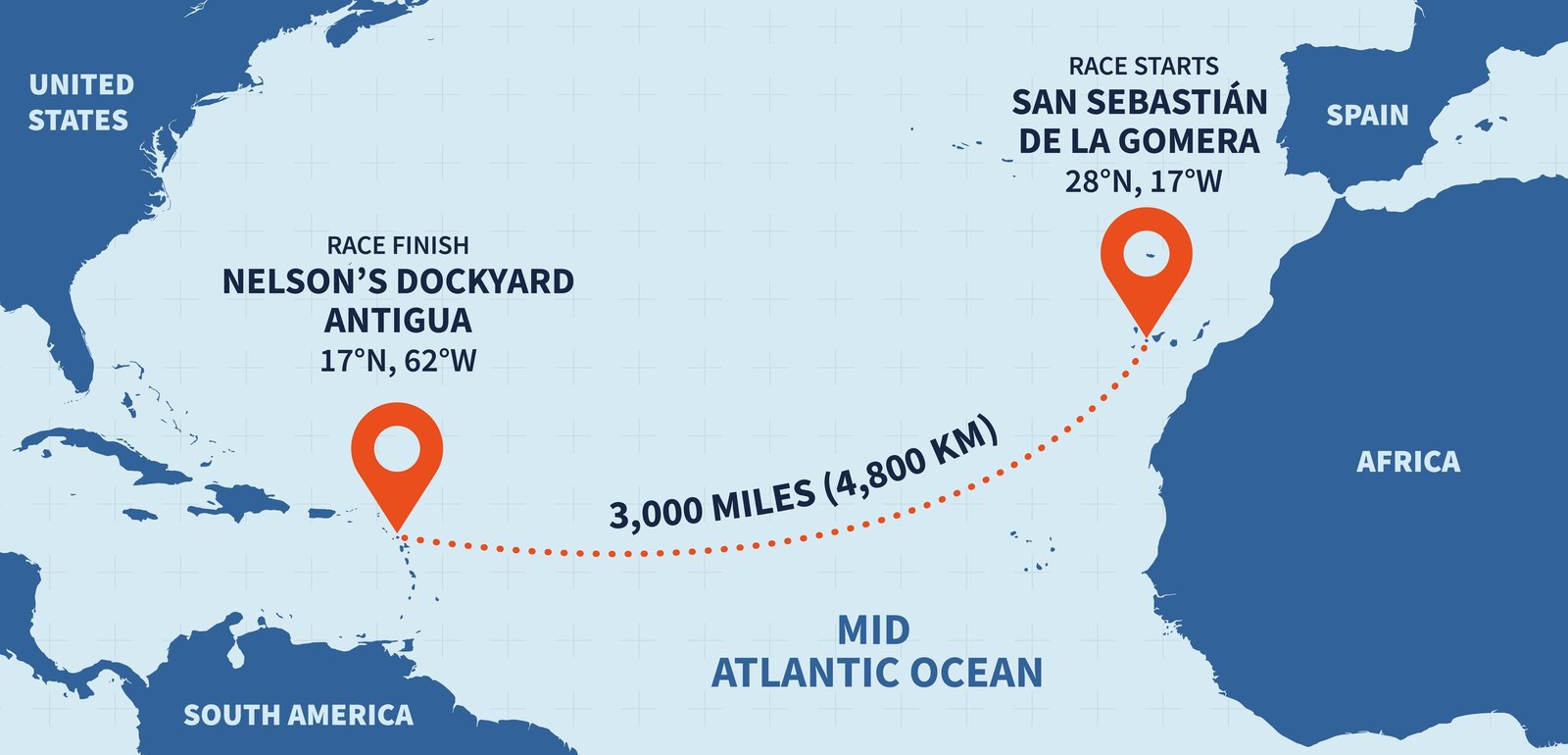
The Atlantic course: La Gomera to Antigua, 3,000 miles of open ocean. Map: World's Toughest Row.
River rowing vs. ocean rowing
Here's the funny thing. Put an Olympic sculler and an ocean rower side by side, and the only thing that really looks the same is the seat. Both slide, and the stroke is the same basic motion: legs, body, arms. Almost everything else is different.
- The race. An Olympic race is 2,000 meters and takes six or seven minutes. An Atlantic crossing takes a month for the fastest crews and up to three months for solo rowers.
- The boat. A racing shell is built to be light and fast on flat water. An ocean boat is built to survive: cabins to sleep in, solar panels, a watermaker, storage for months of food, and a hull designed to turn itself upright if it capsizes.
- The oars. Even these are different. River oars are long and light, built for speed. Ocean oars are made to take a pounding from waves, day after day, and to survive being knocked around.
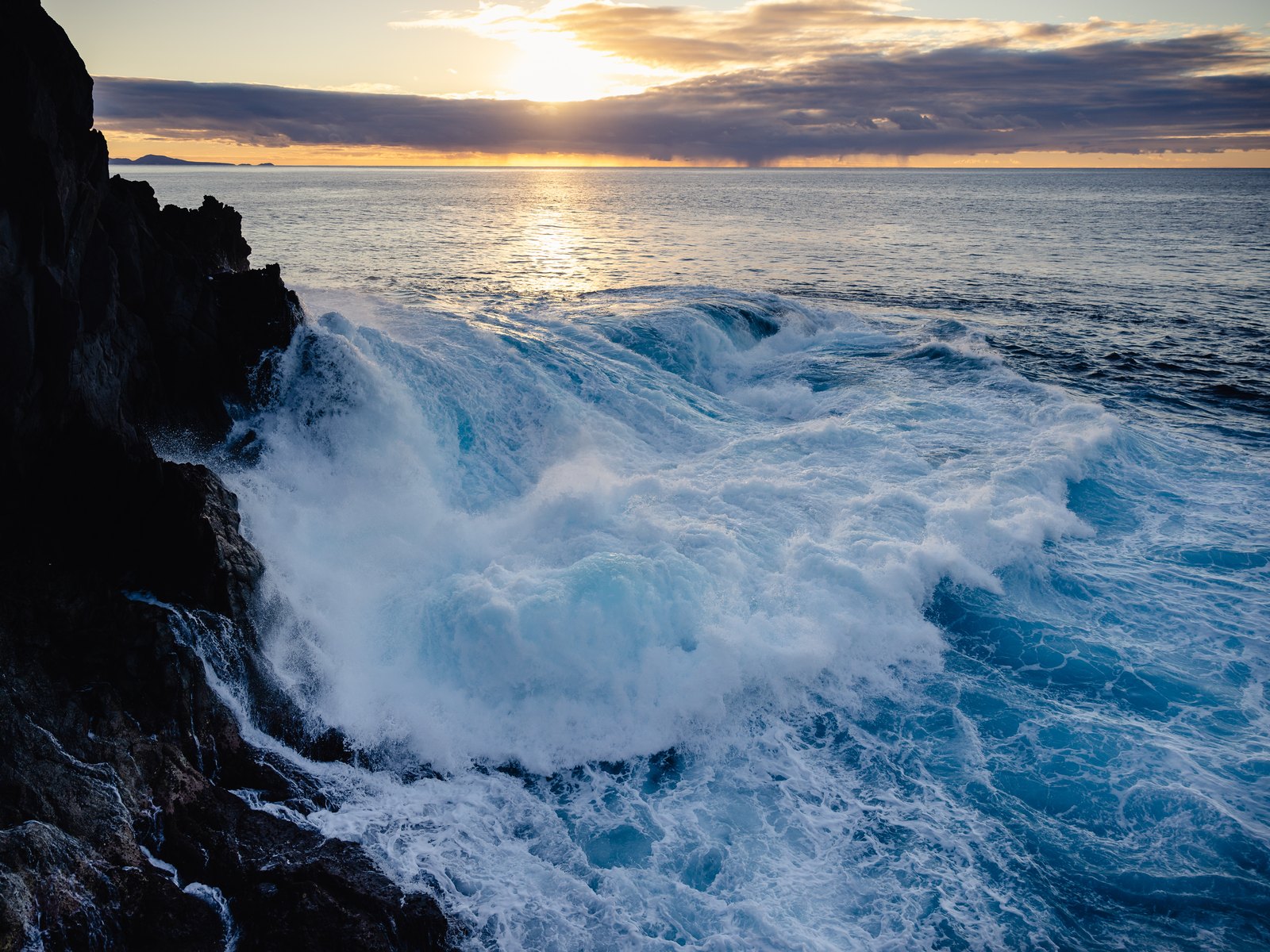
- The water. River rowers race in marked lanes on calm water. Ocean rowers deal with swells, wind, currents, and waves the race describes as up to 20 feet.
- The body. A river race is an all-out sprint. An ocean crossing is endurance on a scale that's hard to picture: rowing 12 hours a day or more, short sleeps, sore hands, salt sores, and all of it while losing weight you can't put back on.
- The training. River rowers train for power and speed. Ocean rowers train for endurance, and also for seamanship, navigation, repairs, first aid, and the mental side of weeks alone or in a tiny crew.
Same seat, same stroke. Completely different sport.
Where it started
Rowing across an ocean is older than most people think, and it started in New Jersey. In 1896, George Harbo and Frank Samuelsen, two Norwegian immigrants who dug clams off the Jersey Shore, rowed an 18-foot boat from New York to the Isles of Scilly in 55 days. They were the first people to row across the Atlantic. Seventy years later, in 1966, Chay Blyth and John Ridgway made the crossing in 92 days.
Blyth went on to create the race. In 1997, his company organized the first Atlantic rowing race: 30 crews of two set out from Tenerife for Barbados, and the winners took just over 41 days. The race changed names and organizers a few times over the years. Since 2012 it's been run by Atlantic Campaigns, raced for years as the Talisker Whisky Atlantic Challenge, and since 2022 it has been the World's Toughest Row. The race's history page tells the whole story.
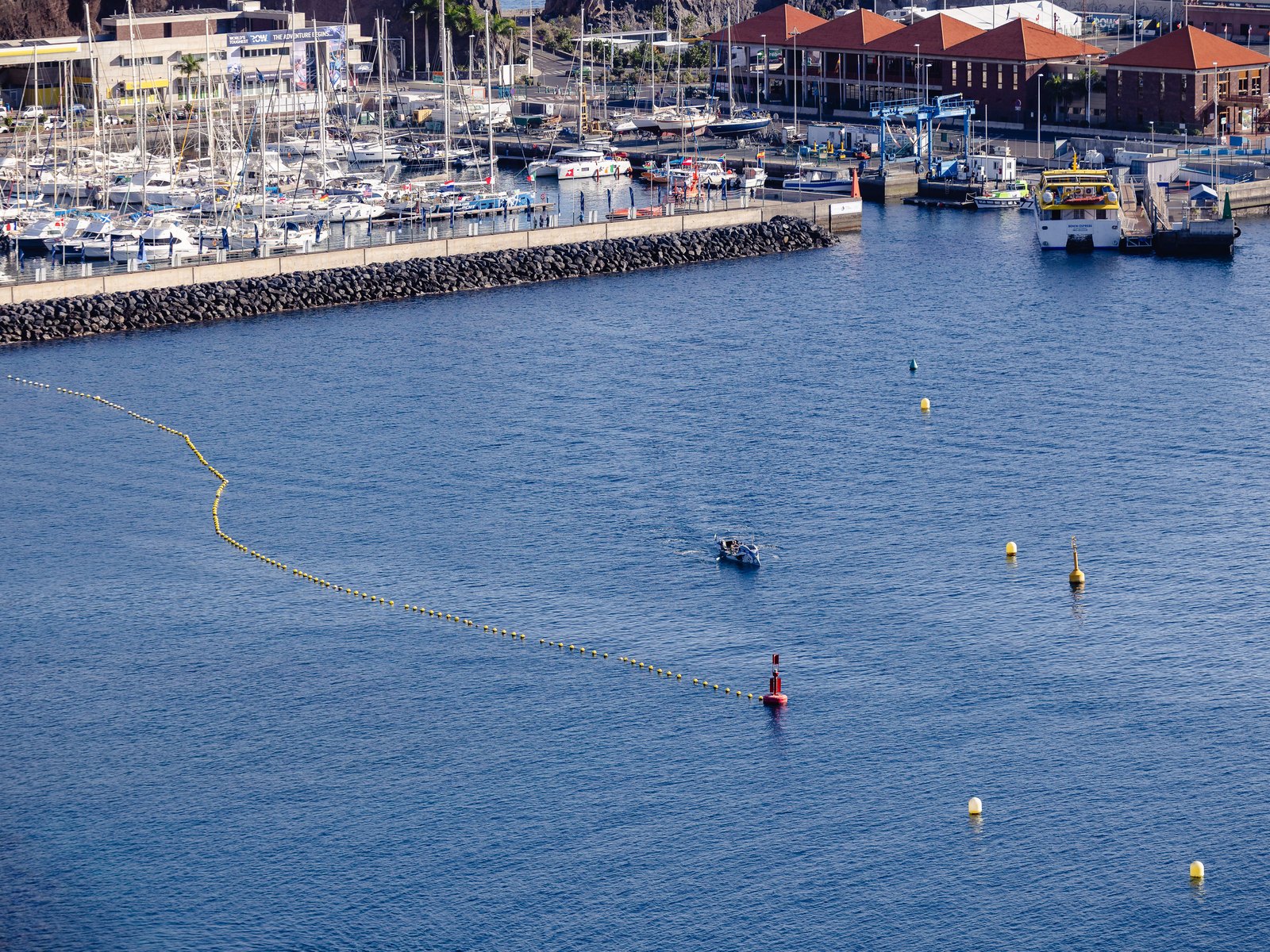
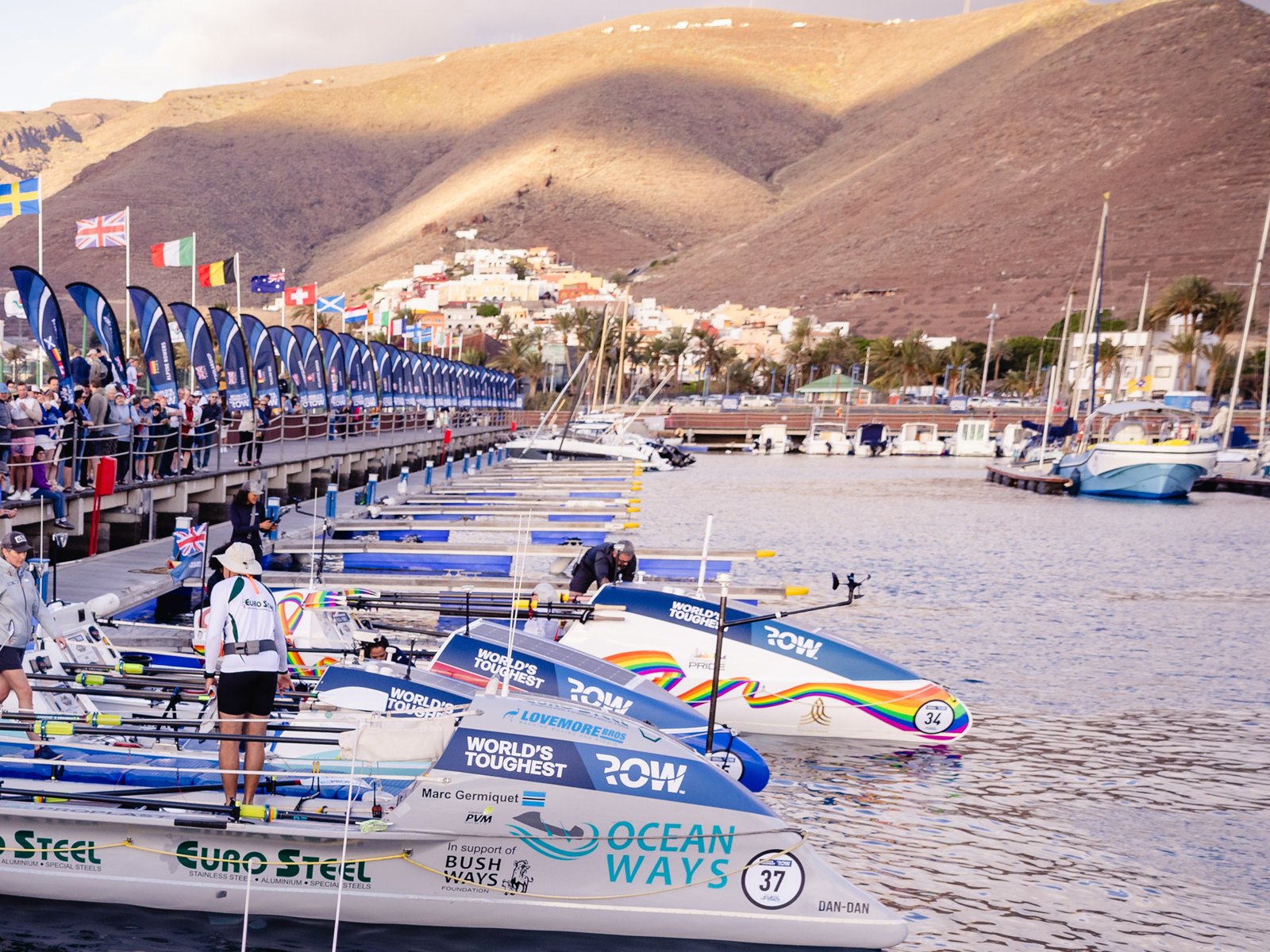
The harbor at San Sebastián de La Gomera, where every Atlantic crossing in the race begins. Photo: World's Toughest Row.
The records
A few of the standing records, to give you a sense of what's possible:
- Fastest Atlantic crossing: The Four Oarsmen, a crew of four, in about 29 and a half days (2017).
- Fastest solo: Mark Slats of the Netherlands, in 30 days, 7 hours, and 49 minutes (2017). He also holds the pairs record.
- Fastest 24 hours: Fortitude IV, at 107 nautical miles in a single day.
- Fastest on the Pacific: Team Swiss Raw, in 25 days and 2 hours (2025).
For a solo rower like me, finishing is the goal. Those numbers are for admiring, not chasing.
You race the conditions
Here's what makes ocean rowing different from almost any other race: the course changes every year.
The route is the same, but the weather isn't. The trade winds, the currents, and the storms are different every December. The race itself describes 2017 as one of its fastest years and 2018 as calm and slow. Winning times on the Atlantic have ranged from under 30 days to more than 50.
So a time that wins one year might not make the top ten in another. You can't race last year's ocean. You race the one you're given.
Ocean rowing goes Olympic (sort of)
There's one more reason ocean rowing is getting attention. At the Los Angeles 2028 Olympics, rowing adds a new discipline for the first time: coastal rowing, raced as "beach sprints" at Long Beach.
To be clear, nobody will be rowing to Hawaii for a medal. Beach sprints are short, fast races that start with a run across the sand, out through the surf, and back. But for the first time, rowing on the open ocean will be part of the Olympic Games, the same year I row the Atlantic.
The takeaway
Ocean rowing borrows the seat and the stroke from the sport most people know, and changes almost everything else. It's less a race against other boats than a long negotiation with the ocean.
What surprised you most about ocean rowing? Tell me on Instagram or send me a note.