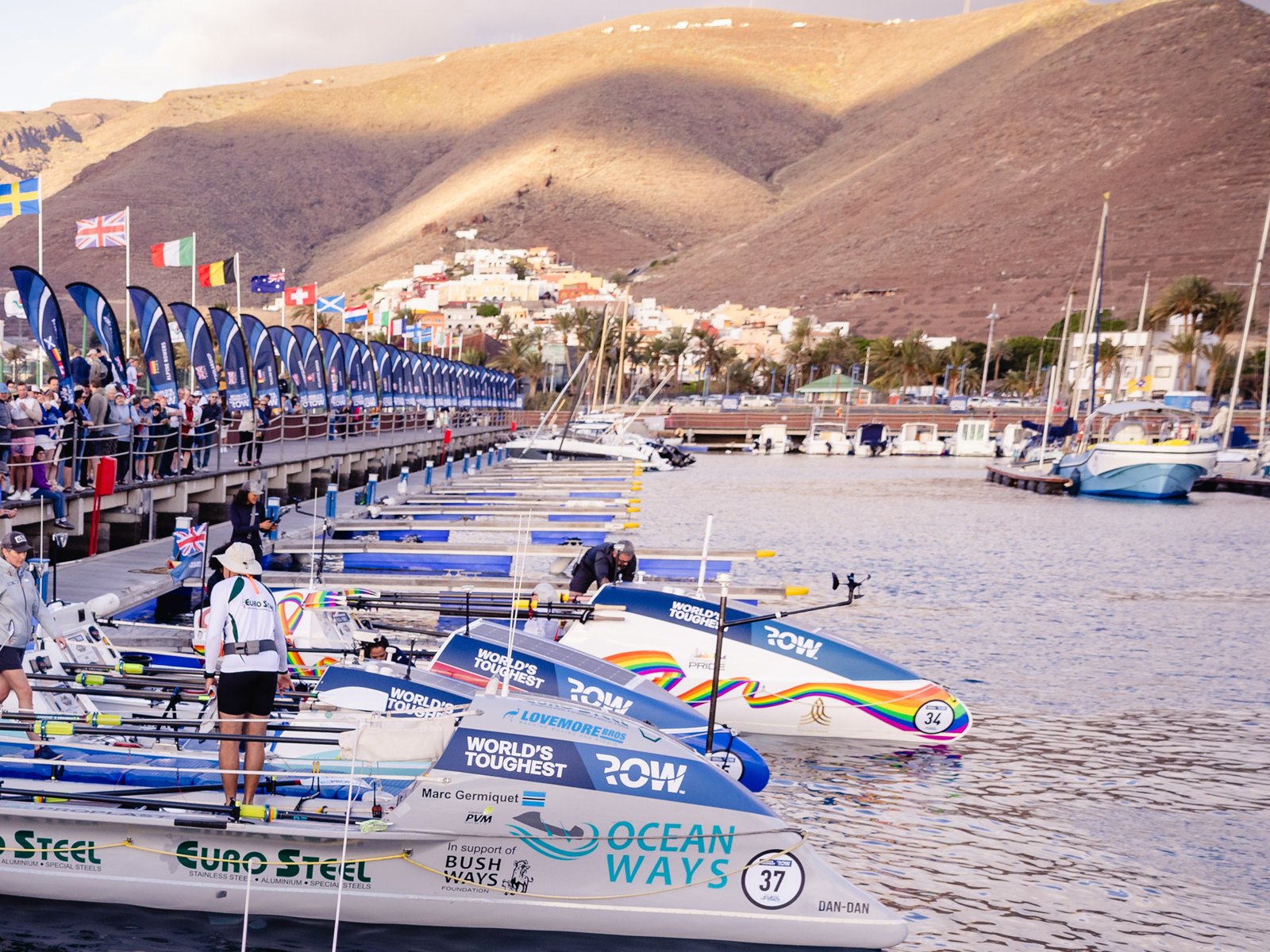
Once I said it out loud, I'm going to row the World's Toughest Row, the next step was obvious: get my body ready to train for it. I had a lot of ground to make up.
I've been fit before. I once ran the Marine Corps Marathon a little faster than Oprah Winfrey, whose finish time is famous enough that runners call it "the Oprah line". I'll take the win. I regularly scored a "Good Low" on the Navy's Physical Readiness Test, which is exactly as impressive as it sounds. And years ago, I was at the pinnacle of my fitness when I made it through dive training at the Naval Diving and Salvage Training Center in Panama City, Florida. Hooyah!
None of those versions of me was going to show up for this. I had to start from where I actually was.
Starting slow
I began with incline walking on the treadmill, getting my heart rate up in a controlled way. My back had been aching for years, so I added regular stretching to the routine. On nice days, I pulled out my old mountain bike and rode around the neighborhood to get the blood flowing.
At first it went well, with the usual aches that come with any new routine. Then a nagging ache settled into my left hip.
Ignoring the warning light
I did what most people do. I searched online, decided it was tendinitis or bursitis, lowered the incline, added some targeted stretches, and took more ibuprofen.
Ibuprofen and I have history. It was a daily habit before my knee replacements, and afterward I'd managed to quit it. As my weight crept up, it came back to quiet my back. Now it was struggling to quiet my hip.
It didn't work. Over the next several weeks, the pain grew and I could do less and less. After several doctor visits, the cause finally showed up on an MRI: a non-displaced fracture of the femoral neck. In plain English, I had broken my hip.
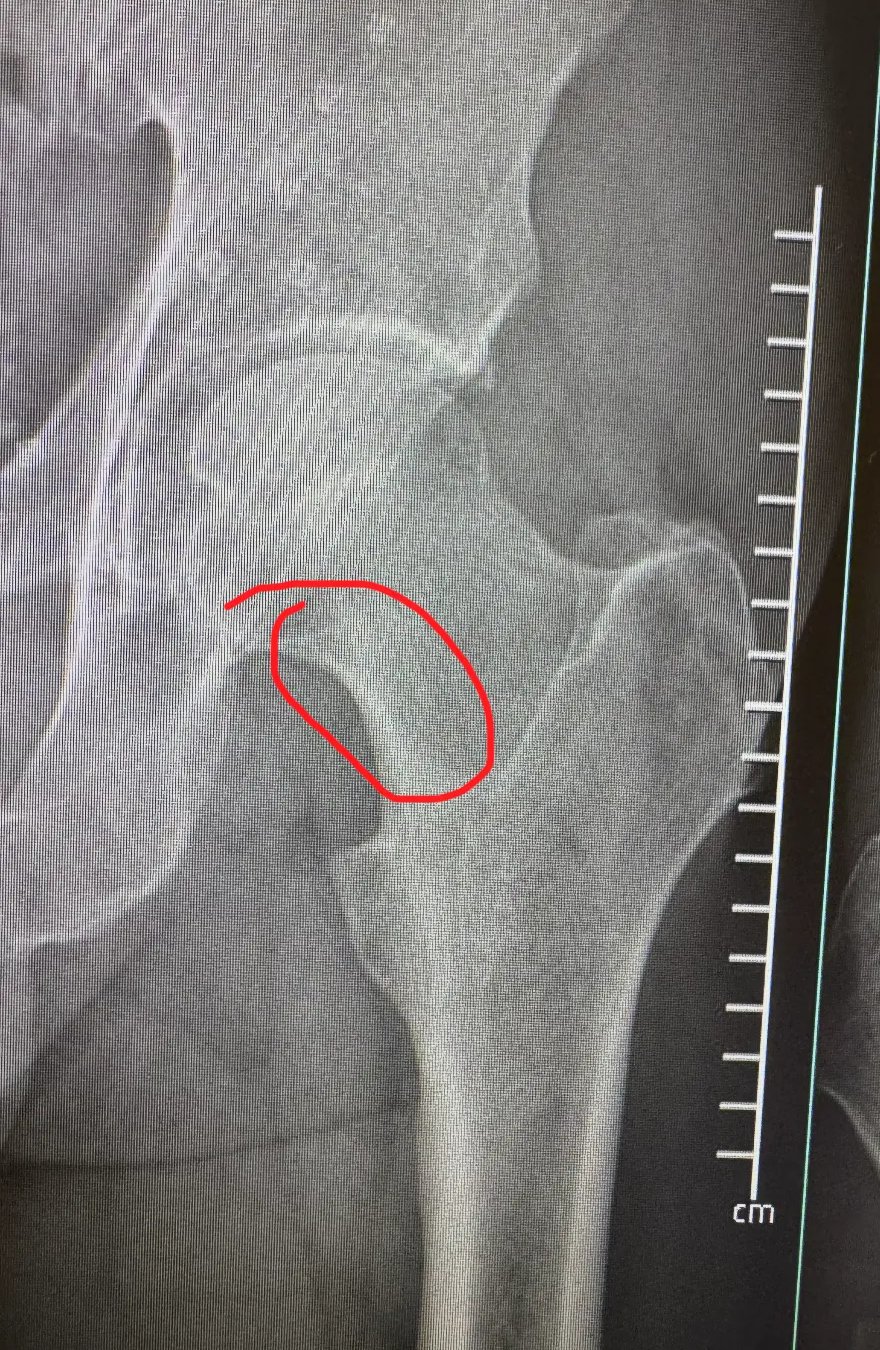
The X-ray that ended the guessing. The red circle marks the barely visible fracture.
Two steps back
That one hit hard. I was finally on course, and now I had an injury most people associate with the elderly, not with someone planning to row across the Atlantic solo. I'll admit I spent a few days feeling sorry for myself.
Then I decided to meet it head on. A good friend who happens to be an orthopedic surgeon took on my case, and I went to surgery to have it fixed.
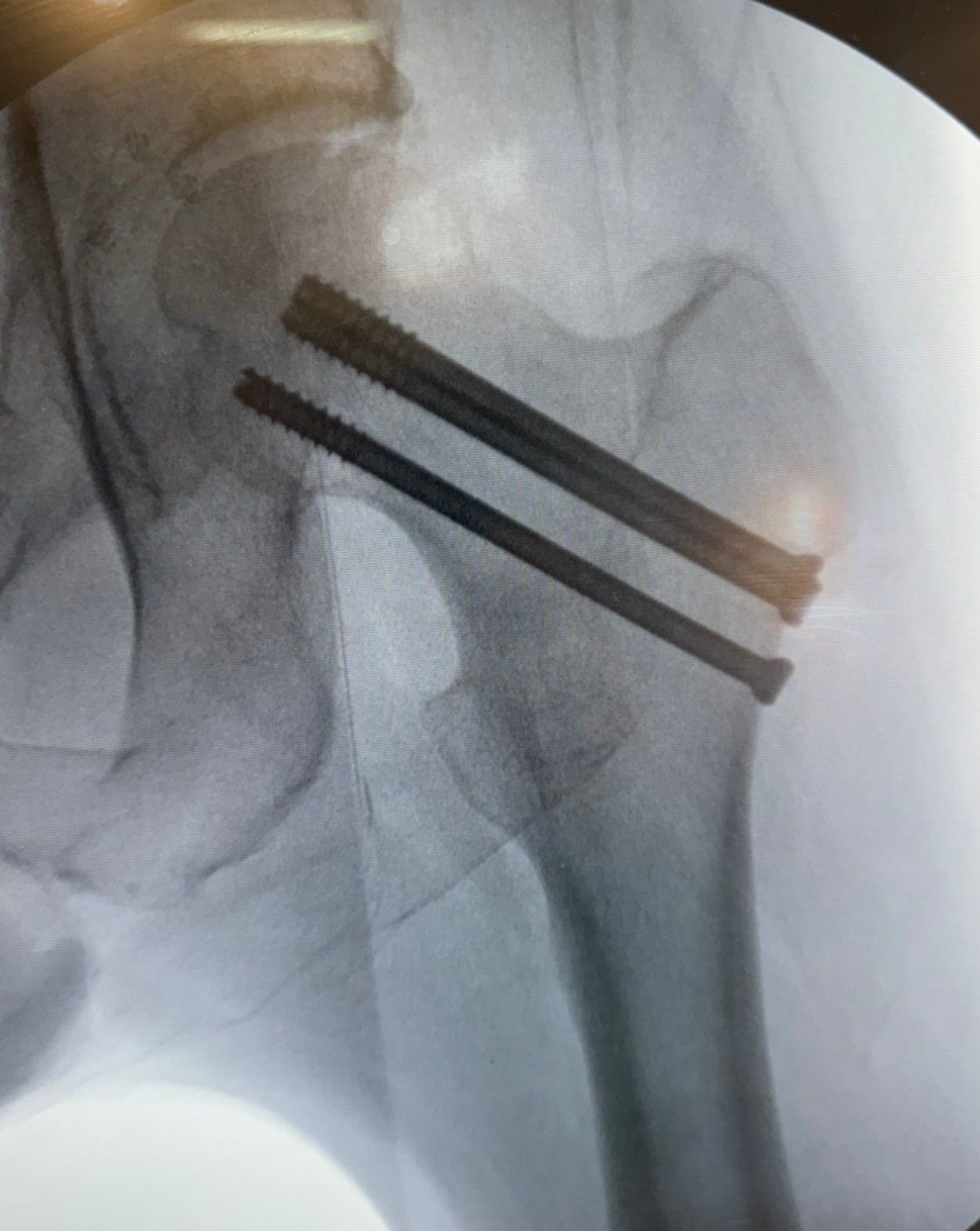
Three screws, holding everything in place (one is hidden in this view).
Back on course
After a gradual rehab, I'm back to working out: regular strength training and plenty of miles on the mountain bike. I'm not quite the Navy diver I once was. Yet.
Next up is a Concept2 RowErg for the basement, and the growing appreciation for cycling I didn't see coming. Both will get posts of their own.
The takeaway
Setbacks are part of any long passage. A course correction isn't one clean turn. It's a series of adjustments, including the ones you didn't plan for. Sometimes two steps back puts you on a better heading.
The lesson I'd pass along: pain that keeps getting worse deserves a real diagnosis, not a better search result.
If you're working your way back from an injury of your own, I'd like to hear how it's going. Find me on Instagram or send me a note.