Most training plans start with miles, meters, and minutes. Mine starts a little further upstream: with what I eat, and what that food does once it's inside me.
A quick note before we start: I'm sharing what I've read and what has worked for me. This isn't medical advice. Talk with your own doctor before making big changes to how you eat.
Where I started
Over the years, my diet drifted the same way the rest of my life did. Fad diets. Quick meals between obligations. Processed, convenient food that was easy to grab and easy to forget. I'm far from alone there: according to the CDC, more than half the calories American adults eat come from ultra-processed foods.
My metabolism changed along with it. A healthy weight for me used to be 205 pounds. Last year I peaked at 226. I had aches and pains just about everywhere, a back that complained daily, and digestive problems serious enough that several of them ended in surgery.
Down the microbiome rabbit hole
I started out researching probiotics and ended up somewhere much bigger. The more I read, the more convinced I became that the gut isn't only about digestion. What we feed it appears to be connected to immunity, inflammation throughout the body, and even mood. Researchers are still working out how much and how, but the direction of the evidence is hard to ignore.
Two books shaped my thinking:
- Super Gut by Dr. William Davis opened my eyes to the science of the microbiome. One idea that stuck with me is his argument that today's high-yield wheat is very different from the heritage varieties our grandparents ate. I don't have celiac disease and don't claim to be gluten sensitive, but it changed how I think about the bread I buy, now the bread I make.
- The Reset by nutritionist Rose Ferguson has reinforced my belief in the importance of a healthy digestive system and gave me practical tools and habits for gut health, and I've been working them into my daily routine.
As I have dug deeper down the rabbit hole of the microbiome, one study made it concrete for me. In a 2021 Stanford trial, adults who added fermented foods like yogurt, kimchi, and kombucha to their diet for 10 weeks saw the variety of their gut bacteria go up and 19 markers of inflammation go down. It was a small study, but it's the kind of evidence an everyday person can wrap their head around.
What's in my kitchen now
This is where it gets fun. My kitchen has turned into a small fermentation lab:
- Yogurt. I make my own, using specific probiotic strains, cultured low and slow at 100°F for 36 hours.
- Kombucha. I brew it regularly.
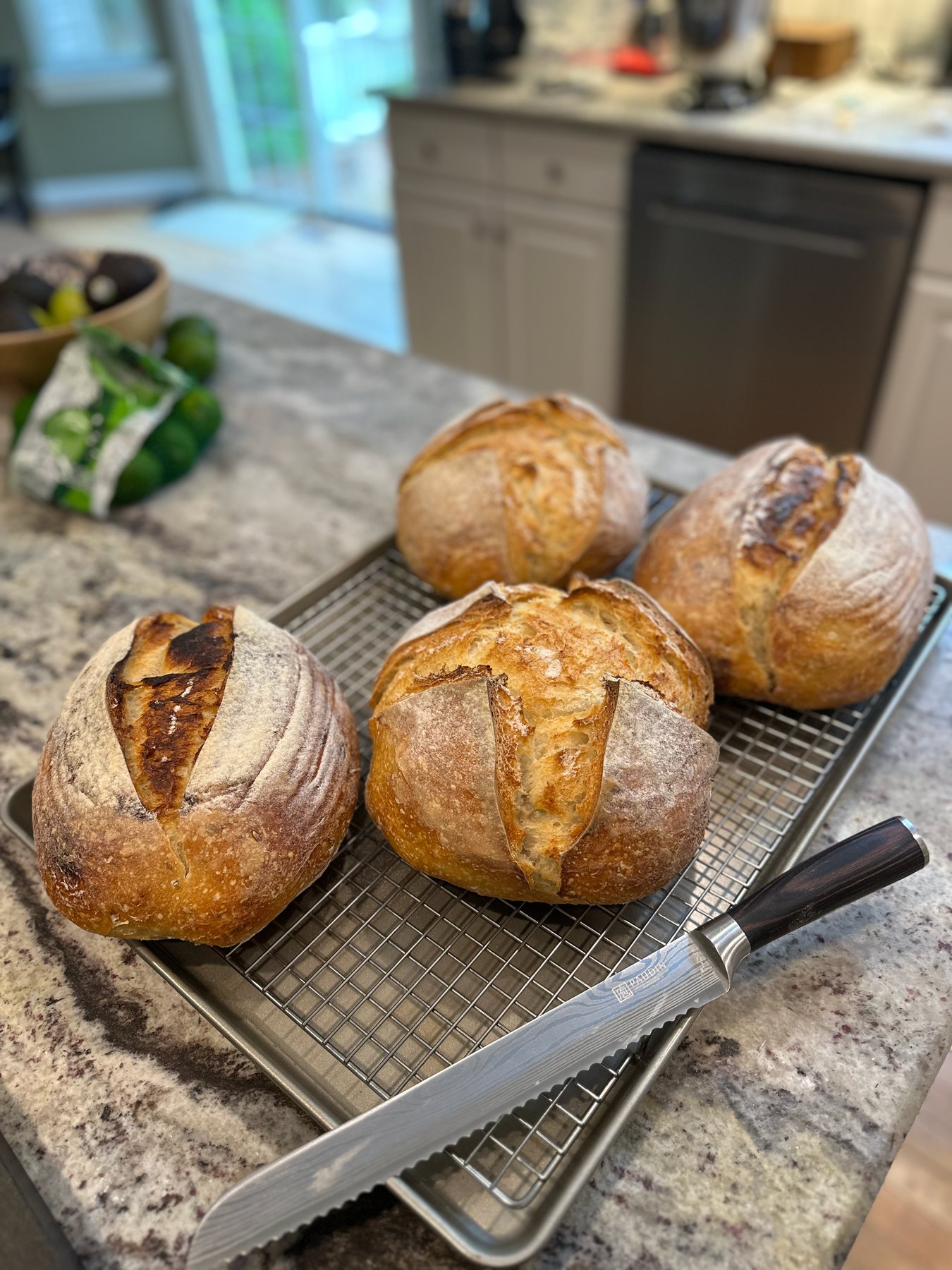
- Sourdough. I bake a pretty great loaf from a culture shared with me by Catie, a former co-worker. Sourdough is a bit like a cult, and it's about more than the bread. That's a post of its own.
- Kimchi. I've made it several times but haven't had the time to master it, so I lean on store-bought. My current go-to is Cleveland Kitchen.
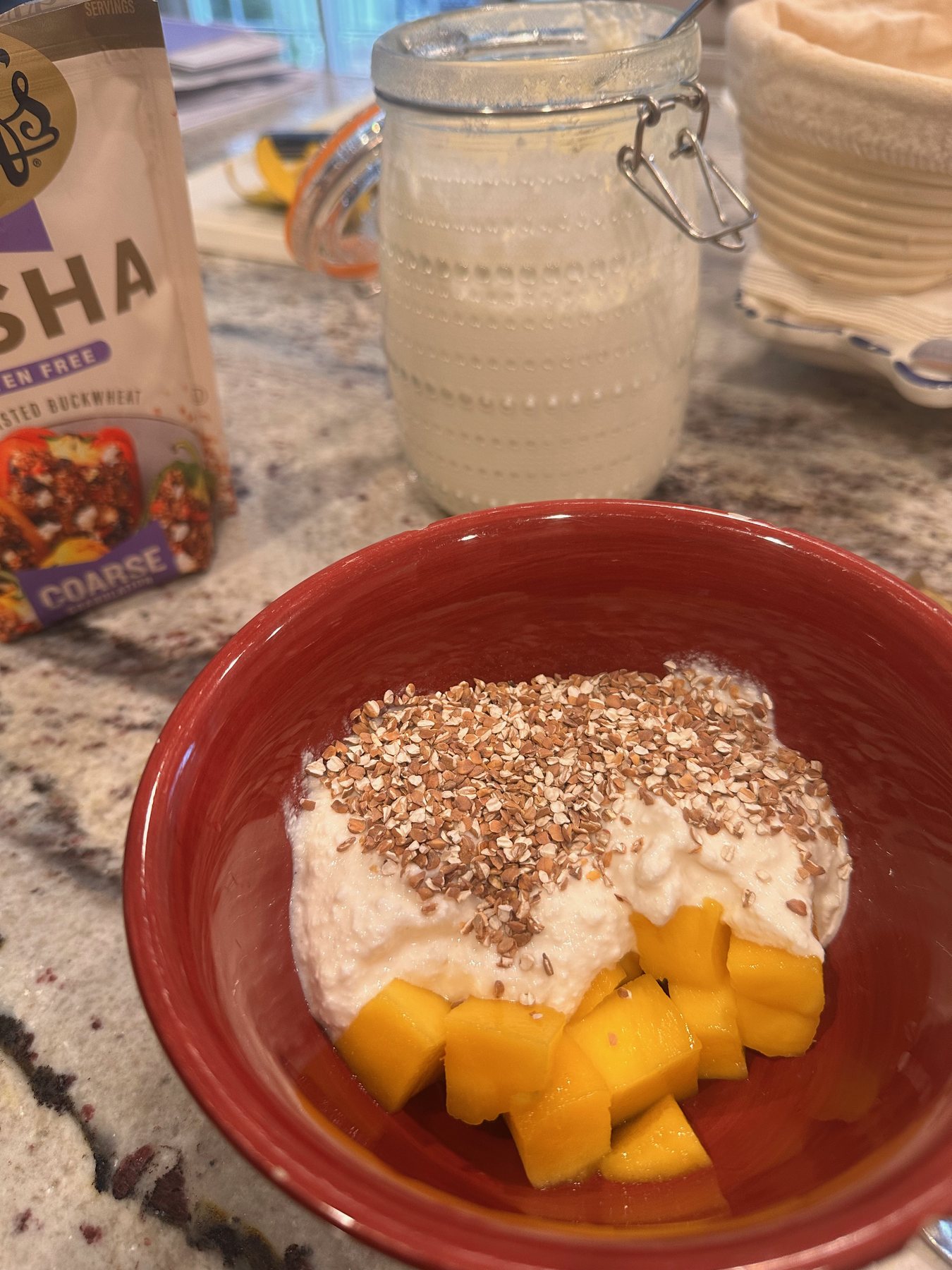
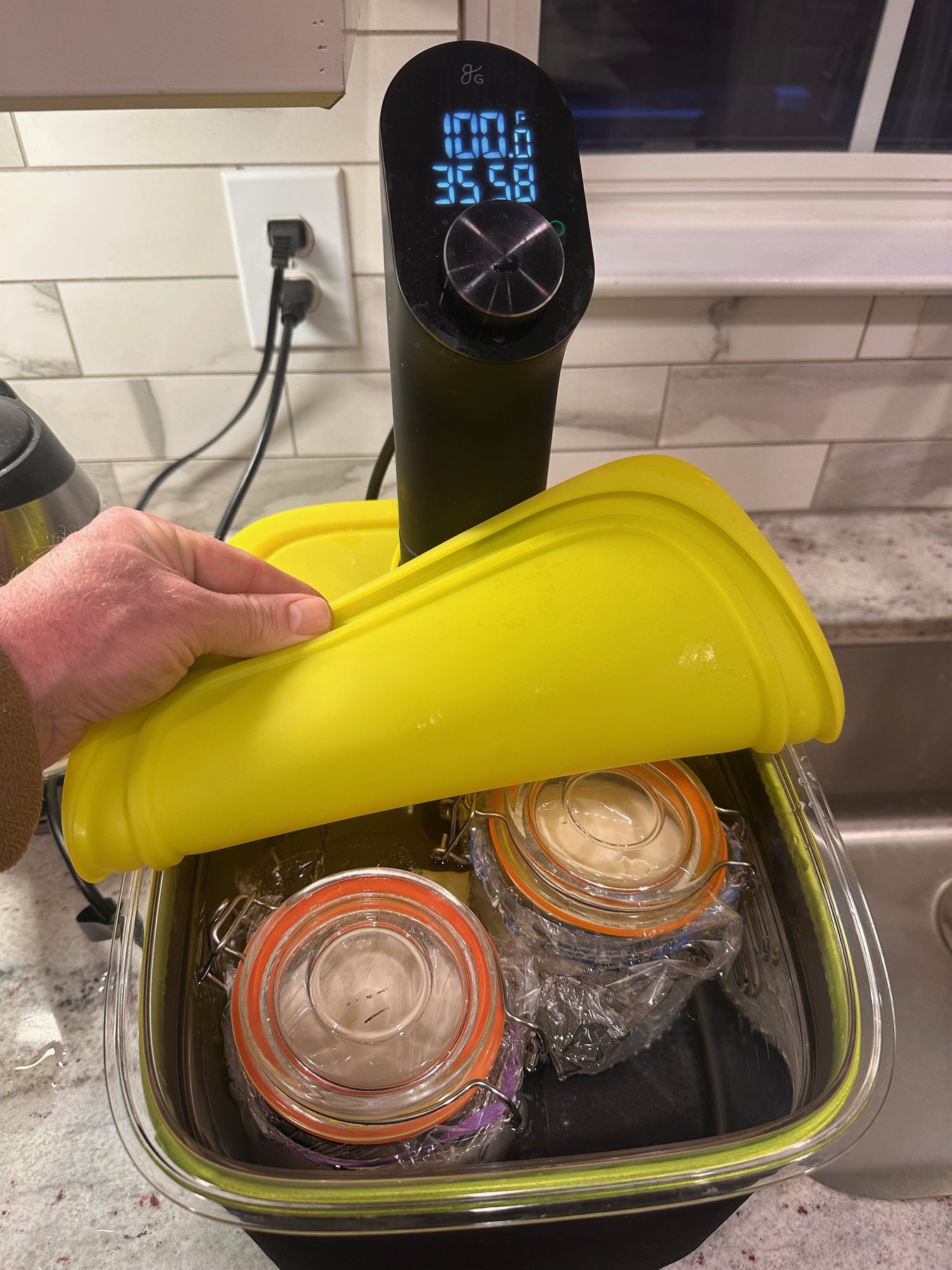
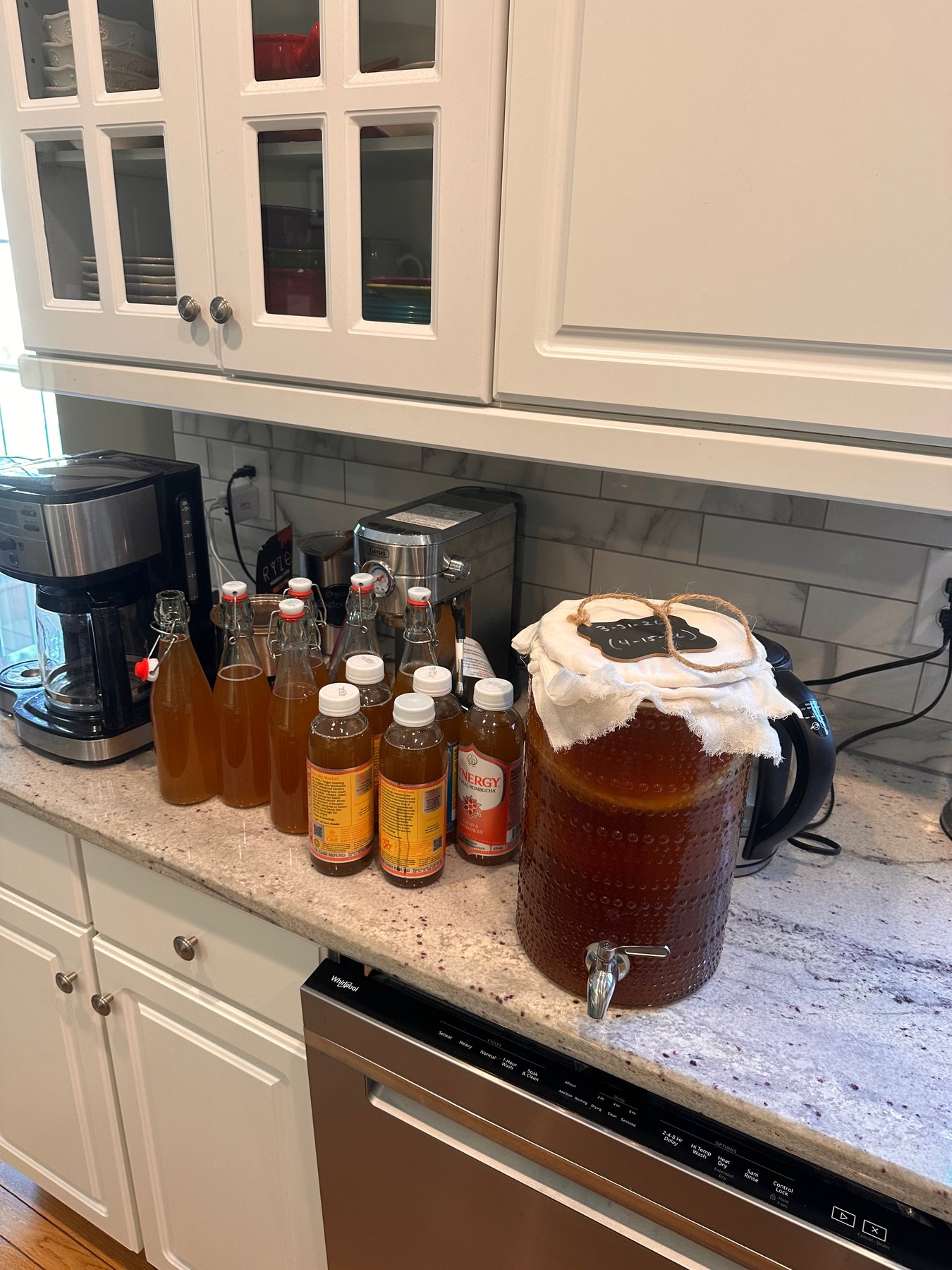
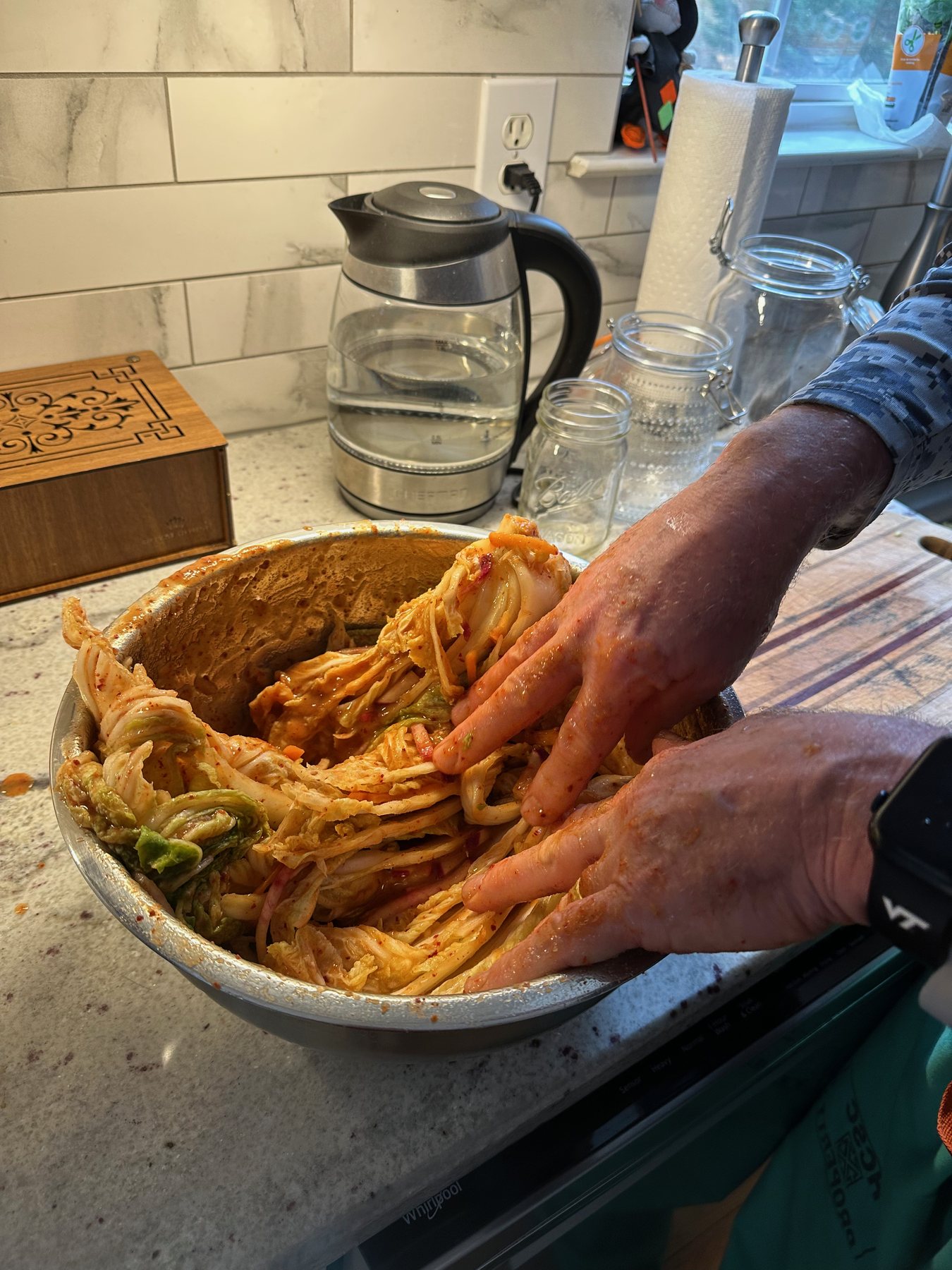
Top: homemade yogurt with mango and seeds, and the jars culturing for 36 hours in a 100°F water bath. Bottom: kombucha brewing and bottled, and a batch of kimchi coming together.
Fiber is the other half of the story, and I'll dig into it in a later post. For now, one number: an estimated 95% of Americans don't get the recommended amount. That used to be me, but not now.
The results so far
I'm back to 205 pounds, 21 pounds down from my peak and right where a healthy weight used to be for me. My mood is better, and I generally feel healthier than I have in years. I can't hand all the credit to my gut, and I won't pretend a jar of kimchi and Kombucha fixes everything. But I've shifted my focus from simply managing what goes into my body to understanding why it matters.
Every mile of the World’s Toughest Row will be fueled by what I eat, on land now and on the water later. Training from the inside out is part of the plan.
What's next
This is the broad overview. In future posts, I'll get into the details: sourdough and why people get so attached to their starters, making yogurt at home, and what I'm learning about fueling for the Row.
What's on your plate? If you ferment, bake, or brew anything at home, I'd like to hear about it. Find me on Instagram or send me a note.